
Practical pool advice
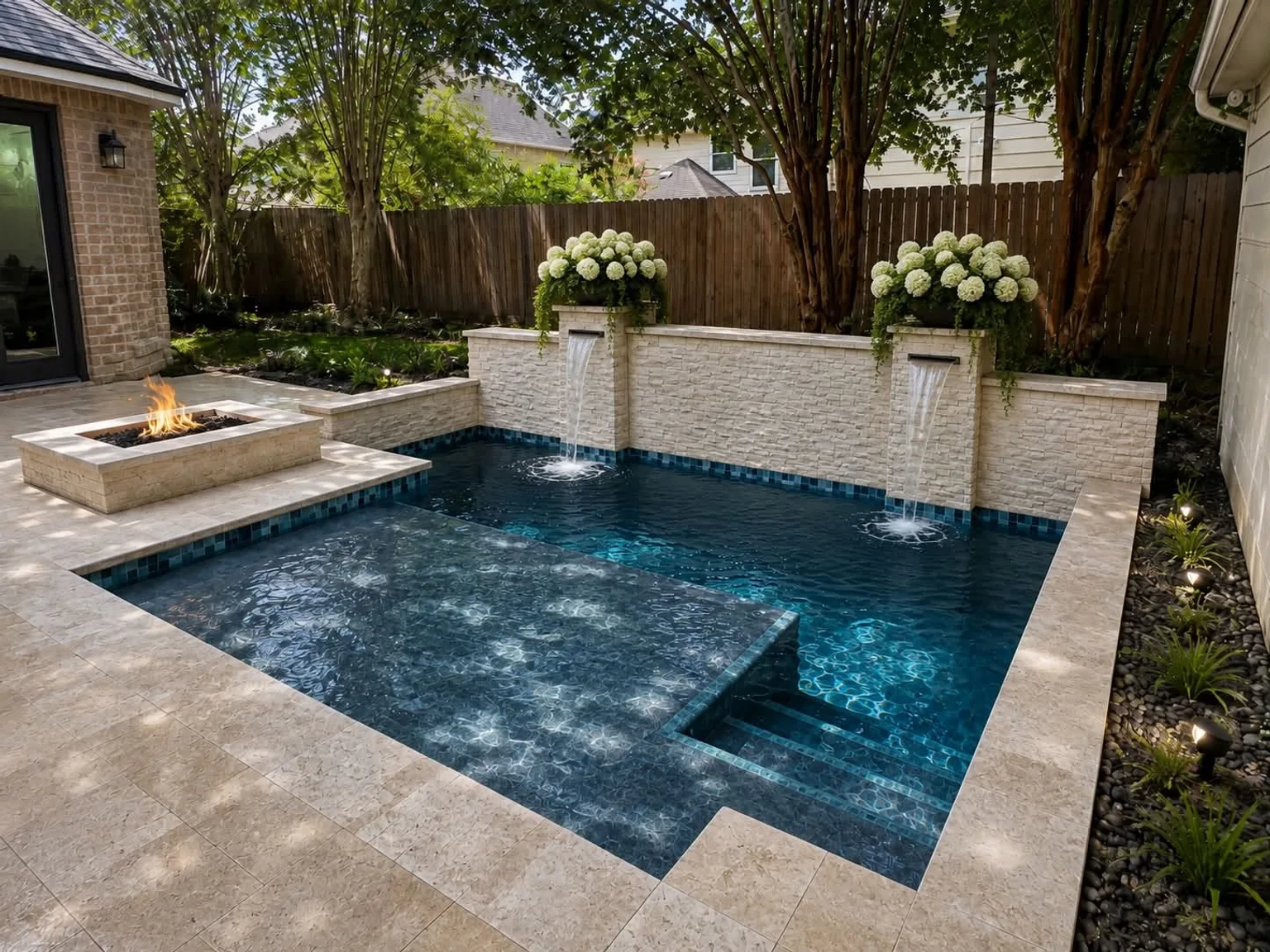
Make tile, coping, and decking work as one design
Coordinate the pool edge with this guide to waterline tile, coping profiles, deck texture, joints, and a consistent material palette for your backyard.
Content updated
Choose one element to lead the design
Start with the part you intend to keep: the house exterior, existing patio, or a pool finish you already like. Choose the other materials to complement it. Repeating a color or texture can create continuity without making every surface identical.
Evaluate the edge as a detail you will touch
Coping should be comfortable to grip and suitable for its location. Review the profile where someone sits or climbs out. Bring corner pieces and curved-edge details into the conversation; the appearance of one straight sample does not answer every installation question.
Place the samples in daylight
Look at waterline tile beside the coping and deck finish outside. View the combination from the house as well as close up. Strong patterns can become much more prominent when repeated around the whole pool. Use a restrained field material if the waterline is the main accent.
Resolve function before the final color choice
Movement joints, runoff, wet traction, and finished levels need a place in the scope. Ask how the new deck will meet existing doors, paths, and drains. Decorative treatments should follow those decisions rather than conceal an unresolved transition.
Plan the sequence once
Replacing tile after a new interior is installed can complicate protection and finishing. Review the complete edge before construction so tile and coping, deck work, and resurfacing can be coordinated. Keep the final sample selections and product names with the written proposal.
Compare the pool edge with the surrounding patio
Bring the coping and deck samples together rather than selecting them on separate visits. Check how a new edge meets the retained patio and whether removing tile or coping will disturb adjoining work. Ask the proposal to define the repair boundary and the expectation for matching older material.
Measure three different things
The interior is measured in surface area, tile and coping often use perimeter length, and deck treatment uses its actual area. Raised walls, spas, and stairs require additional detail. Use those quantities in the budget worksheet so a deck allowance is not confused with the pool’s water footprint.
Resolve runoff before applying a finish
For a property with a change in grade, mark runoff routes and areas of settlement. A decorative surface is not a correction for drainage or movement. Have the appropriate assessment establish the repair before choosing the final appearance.
Planning information compiled from the linked public resources and project-scope guidance. Examples are illustrative. Product instructions and the assessment of your property determine the final work. About this site.