
San Antonio pool renovation
Considering a salt system for your existing pool?
Explore saltwater conversion in San Antonio, including cell sizing, material compatibility, ongoing water testing, and timing with a new pool finish.
Content updated
Why homeowners choose a saltwater pool
A saltwater conversion can make pool ownership more convenient and swimming more enjoyable. Instead of relying on repeated manual chlorine additions, a generator makes sanitizer from salt dissolved in the water.
Softer, silkier-feeling water
Many swimmers prefer the smooth feel of a well-maintained saltwater pool. It can feel gentler than a pool experiencing high chlorine levels or uneven chemical dosing. Balanced pH and proper sanitation still determine comfort in either system.
Fewer chlorine-handling chores
Spend less time buying, carrying, storing, and adding chlorine tablets or liquid. Your generator handles much of the routine chlorine production; water testing and balancing remain part of regular care.
Steadier everyday sanitation
A properly sized generator produces chlorine during its operating cycles, helping reduce the peaks and dips associated with intermittent manual dosing. Adjusting output and pump runtime keeps production aligned with sun exposure and swimming demand.
A fresher swimming experience
Good sanitation and balanced water help control the chloramines behind that strong “pool smell.” Salt generation can make routine chlorine delivery easier to manage, although conversion alone does not guarantee odor-free water.
Potential savings on routine chlorine purchases
Generating chlorine on site can reduce spending on packaged chlorine. Compare those savings with installation, electricity, balancing chemicals, and eventual cell replacement to judge the long-term value for your pool.
Read more in Pentair’s saltwater pool benefits guide. For your project, we review pool size, existing equipment, and swimming habits to recommend a suitable conversion scope.
Explore a saltwater conversion for your pool.
Understand how salt chlorine generation works
A salt chlorine generator uses dissolved salt to produce chlorine. It is not a chlorine-free pool, and it does not remove the need for water testing, equipment care, or occasional adjustments.
Before choosing a system, have the contractor review pool volume, circulation, electrical needs, and compatibility with existing equipment and surrounding materials. If resurfacing is part of the project, follow the finish manufacturer’s timing for adding salt and starting the generator.
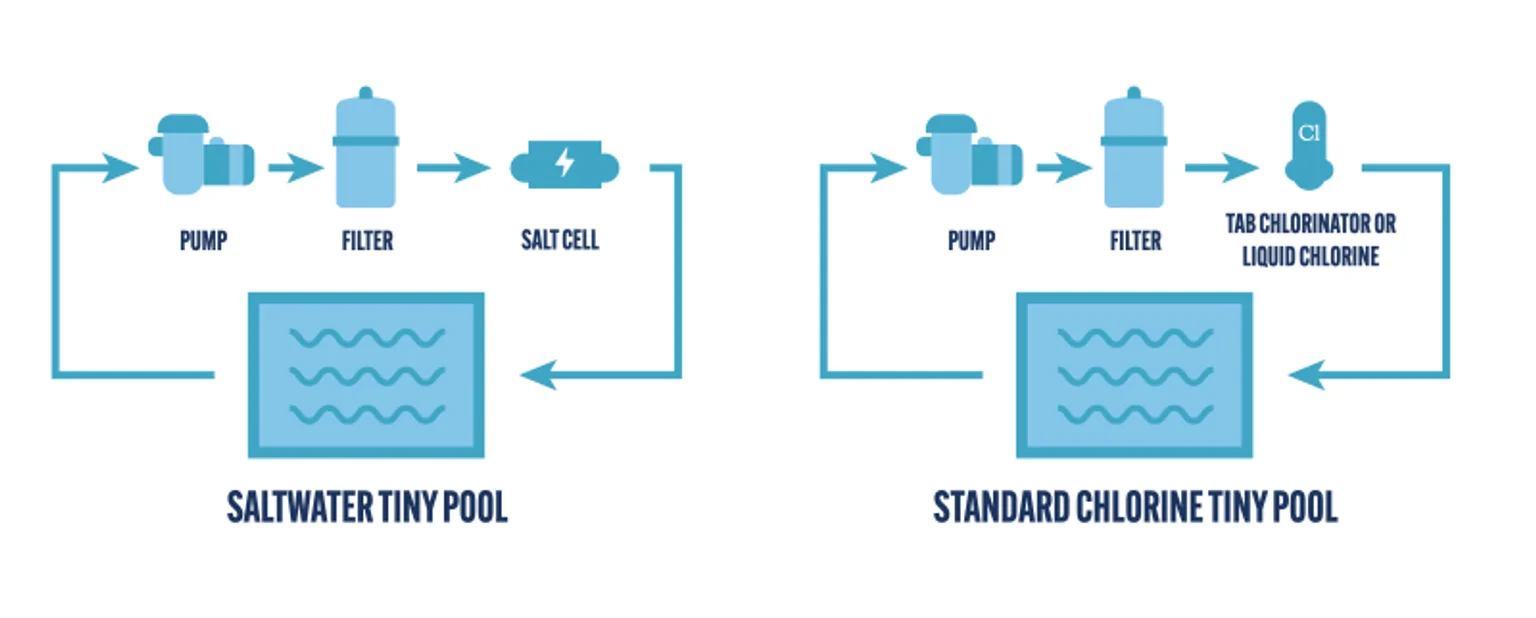
Saltwater versus conventionally chlorinated pools
Compare how each system affects routine care, chemical handling, and swimming comfort. Saltwater does not mean chlorine-free or maintenance-free.
| Feature | Saltwater pool | Conventionally chlorinated pool |
|---|---|---|
| How chlorine is supplied | A salt cell generates chlorine from dissolved salt. | Chlorine is supplied through tablets, liquid, or another approved dosing method. |
| Skin and eye comfort | Often preferred for its softer, silkier feel. Balanced pH and proper sanitation remain essential for comfort. | The same water-quality factors matter; discomfort is not inevitable with conventional dosing. |
| Pacemakers and implanted devices | Interference incidents have been reported with saline chlorination systems. Ask your device clinic and manufacturer about your specific device and pool equipment. | Do not assume automatic medical clearance. Follow device-specific advice and use properly maintained electrical equipment. |
| Pets | Provide fresh drinking water and discourage drinking pool water. | Provide fresh drinking water and discourage drinking pool water. |
| Chemical handling | Fewer routine chlorine purchases and manual additions. Keep testing and balancing the water. | Requires a planned chlorine supply and safe dosing and storage, along with balancing chemicals. |
| Dosing consistency | Produces chlorine during operating cycles; output can be adjusted to pool demand. | Consistency depends on manual dosing or the feeder and controls used. |
| Ownership costs | Potential savings on packaged chlorine, offset by equipment, electricity, and cell replacement. | No salt-generator purchase; budget for ongoing sanitizer and dosing equipment. |
| Ongoing care | Test water, adjust output, inspect the cell, and budget for eventual cell replacement. | Test water, adjust dosing, and maintain the feeder or dosing equipment. |
Sources: Pentair sanitation options, CDC on pool-related eye irritation, and a published report on saline chlorination and implanted cardiac devices. The device report describes incidents, not a risk estimate for all saltwater pools; ask your treating clinic for individual guidance.
Salt changes how chlorine is supplied
A salt chlorine generator uses dissolved salt to produce chlorine. The pool still needs sanitizer monitoring and balanced water. Conversion is worth considering if you want to change the daily chlorination routine, with realistic expectations about maintenance and eventual cell replacement.
Check compatibility before ordering a cell
The proposed system should suit the pool volume, expected use, circulation schedule, and existing controls. Review the heater, metal components, coping, and nearby materials for manufacturer requirements. Product selection should account for the complete installation, not only the price of the generator.
Give the equipment room to work
Installation may involve plumbing changes, electrical work, and controller setup. Ask where the cell will sit and how it can be inspected and serviced. Record the required salt range and learn what the system’s alerts mean so a low-output condition is not overlooked.
Coordinate conversion with resurfacing
If you are renewing the interior, do not add salt simply because the pool is full. The finish instructions and startup plan determine when salt can be introduced. Discuss the temporary sanitizing method and who will make the changeover.
Compare the ongoing responsibilities with your present routine: testing, cell inspection, cleaning when needed, and replacement costs. Our startup guide covers the handoff questions. Tell us about your equipment, or review pump and control upgrades if several parts need attention.
A closer look at the estimate
Confirm cell sizing, flow requirements, controls, bonding, and compatibility with nearby materials. Ask how the system will be set up and how its output will be adjusted as use changes.
If conversion accompanies resurfacing, obtain the finish manufacturer’s instructions for when salt and the generator may be introduced. Keep that timing in the startup plan rather than starting every new component at once.
Scope to confirm before approving work
Request explicit line items for generator model, installation, controls, startup timing, owner training, and consumable replacement expectations. Keep optional upgrades separate from necessary repair work. Put water-provider confirmation, refill responsibility, and any startup coordination alongside the construction scope.
Use the budget planner to compare included items, quantities, and allowances.
Planning information compiled from the linked public resources and project-scope guidance. Examples are illustrative. Product instructions and the assessment of your property determine the final work. About this site.